
Dengue Outbreak Claims Over 1,000 Lives in Bangladesh Amid Climate Crisis
Bangladesh is grappling with its worst dengue outbreak on record, with over 1,000 people succumbing to the mosquito-borne disease, according to official data. This surge is partly attributed to the impact of the climate crisis, which is resulting in rising temperatures and the spread of dengue into regions beyond densely populated urban centers.
BANGLADESH
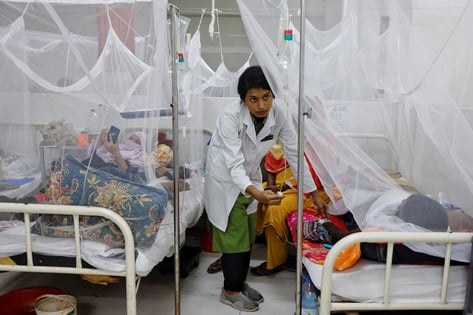
Since January, 1,017 people have lost their lives to dengue, including more than 100 children, with infections surpassing 208,000, as reported by the Bangladesh Directorate General of HS.
Bangladesh is grappling with its worst dengue outbreak on record, with over 1,000 people succumbing to the mosquito-borne disease, according to official data. This surge is partly attributed to the impact of the climate crisis, which is resulting in rising temperatures and the spread of dengue into regions beyond densely populated urban centers.
Since January, 1,017 people have lost their lives to dengue, including more than 100 children, with infections surpassing 208,000, as reported by the Bangladesh Directorate General of Health Services. Although dengue is endemic in Bangladesh, with cases typically peaking during the monsoon season from July to September, this year witnessed a much earlier surge, commencing in late April.
The prolonged monsoon season with warmer temperatures, combined with irregular, heavy rainfall, has created ideal breeding conditions for the Aedes mosquito, the dengue carrier, as noted by scientists. The influx of patients has overwhelmed the country's healthcare system, leading to bed and staff shortages in hospitals.
The fatality rate from this outbreak is nearly four times higher than the previous year, with 281 deaths recorded. September alone reported over 79,600 cases and 396 fatalities, according to Bangladesh health authorities.
There is growing concern that the outbreak might extend into the cooler months. Last year, dengue cases peaked in October, with most deaths occurring in November.
Dengue is a viral infection causing symptoms like severe headaches, muscle and joint pains, fever, and, in severe cases, internal bleeding and death. It is transmitted through the bite of an infected Aedes mosquito, and there is no specific treatment for the disease.
Although dengue is also known as breakbone fever and is endemic in over 100 countries, its impact is rapidly expanding due to the climate crisis. Outbreaks, which were previously confined to densely populated urban centers, have now spread to every district across Bangladesh, even rural areas.
The World Health Organization (WHO) is supporting the Bangladeshi government's efforts to combat the outbreak, focusing on strengthening surveillance, lab capacity, clinical management, vector control, risk communication, and community engagement.
Health experts are urging Bangladesh to prioritize dengue prevention measures, including early detection and access to proper healthcare services, given that repeat dengue infections can be more severe and even fatal.
This dengue outbreak in Bangladesh reflects a global trend as mosquito-borne diseases, including dengue, Zika, chikungunya, and yellow fever, are expected to spread further due to the climate crisis. Dengue has also severely impacted South America, particularly in Peru, while cases have been on the rise in Florida and several Asian countries. As the climate crisis intensifies, the burden of these diseases is expected to increase in more and more countries.
WHO's alert and response director, Abdi Mahamud, has highlighted these outbreaks as early warning signs of the climate crisis, emphasizing that "more and more countries" are grappling with the heavy burden of these diseases.